Since Plato, Western philosophy has divided the world into a « sensory realm » and an « intelligible realm ». Like an atlas, 914 m is an attempt to re-map our relationship with the world in light of the ecological crisis and the fragility of the Earth system by learning, in the words of Bruno Latour, to « inhabit the critical zone », the only place where the conditions necessary for life as we know it exist. 914 m associates this Critical Zone with the Planetary Boundary Layer (also known as the friction layer), which rises an average of 914 meters (3,000 ft.) above the Earth's crust. As the lowest part of the troposphere, this is where most meteorological events catalyze through friction with the Earth's surface. Wind intensity, precipitation, and variations in temperature and humidity are all elements that our senses can immediately perceive. This is the « sensory realm ». Beyond it the climate begins, an infinitely vaster and more complex system made of patterns and regularities that our bodies are far less capable of comprehending without turning to science and abstract reason. This is the « intelligible realm ».Conceived as a triptych shot on exactly 914 meters of 16mm film, 914 m is composed of three films, each exploring a territory of this new ecological condition. For the film itself is also a boundary layer : a thin, sensitive surface where light rubs against the emulsion, much like the weather against the Earth's crust.
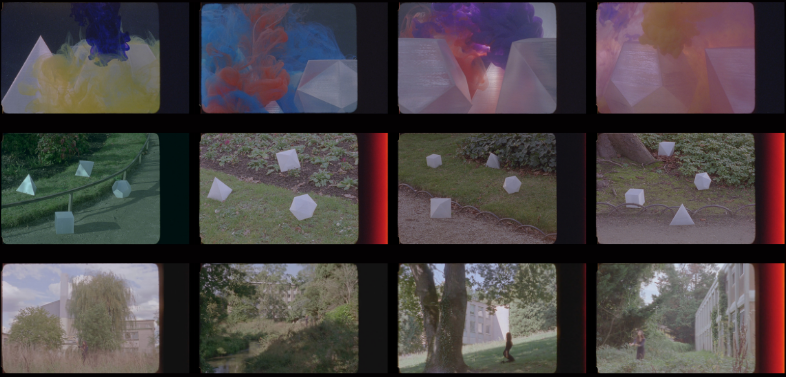
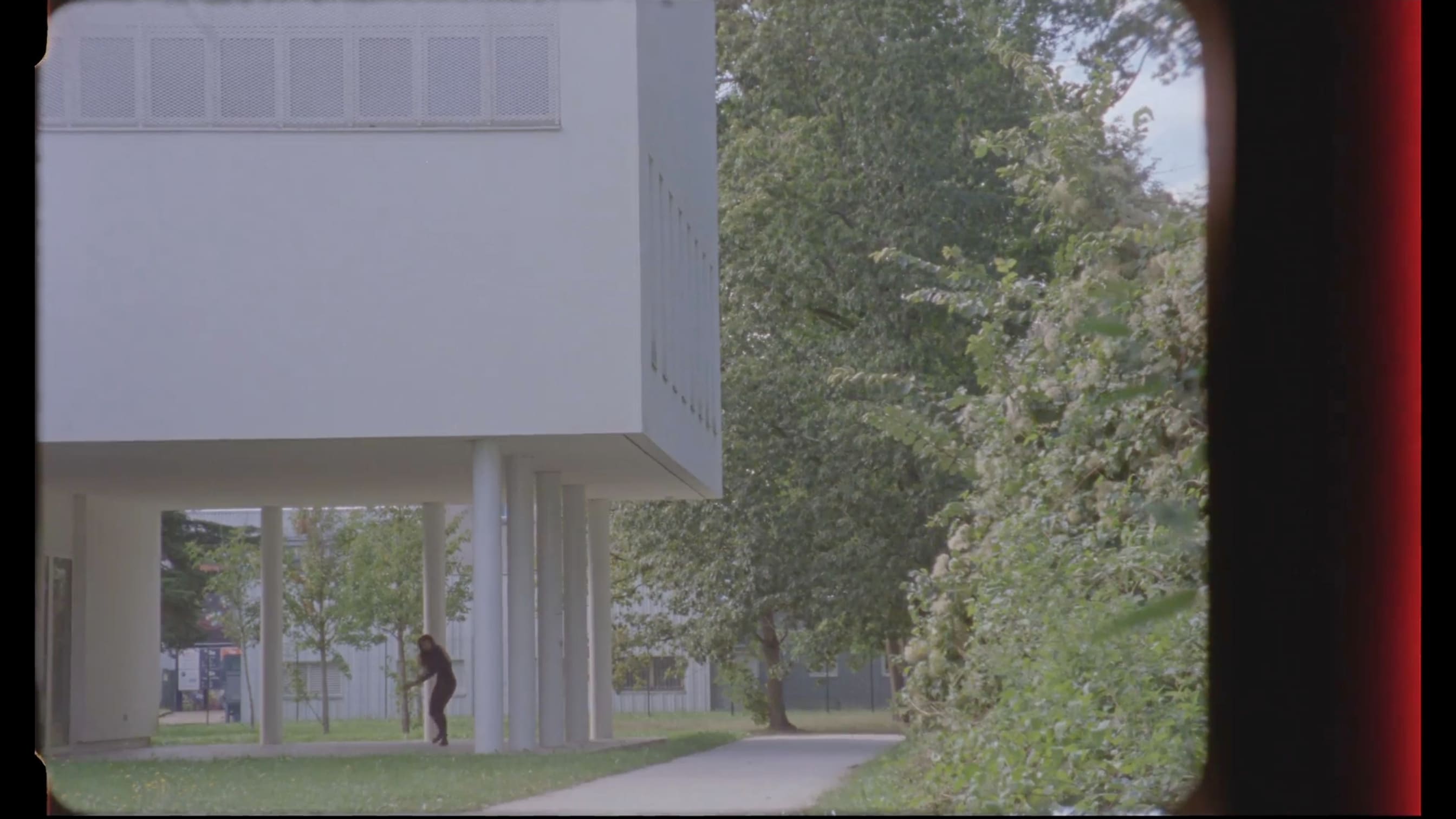
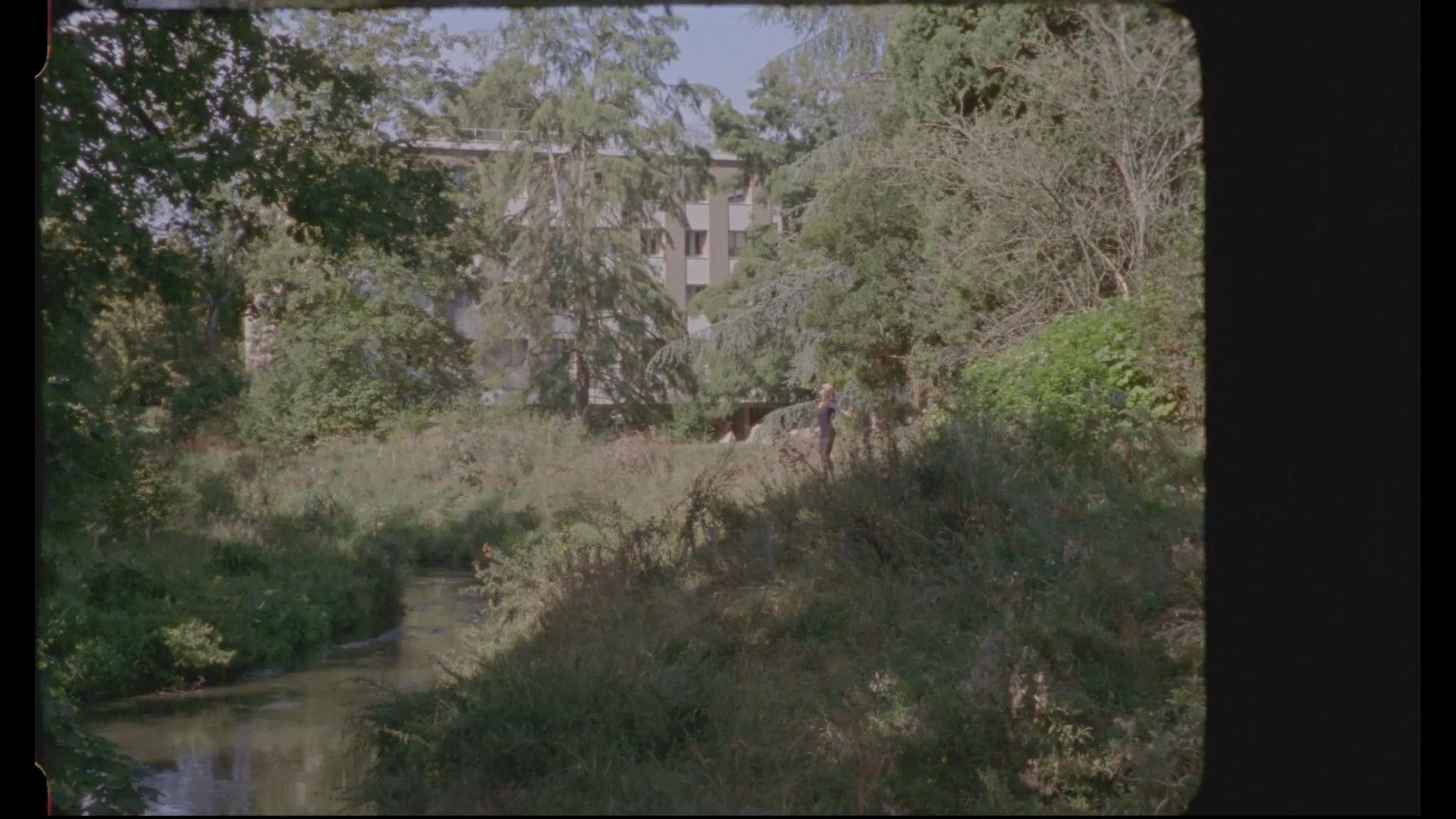
Inscription of sciences : How can we give a tangible form to science when it is systematically associated with realms of the intangible ? Shot on the Paris-Saclay campus – an international economic and industrial cluster and a prominent hub for the global knowledge race – the area becomes once again a physical territory dotted with buildings, human and non-human ecosystems, and infrastructures... A human presence is scattered within every shot. This is a performance by Yu Bai, an artist whose work seeks to « re-invest awareness into the corporality of movement ». Never in full frame, yet always present, she lets the location shape her gestures : the grip of the vegetation, the contours of the architecture, and the nuances of the weather.
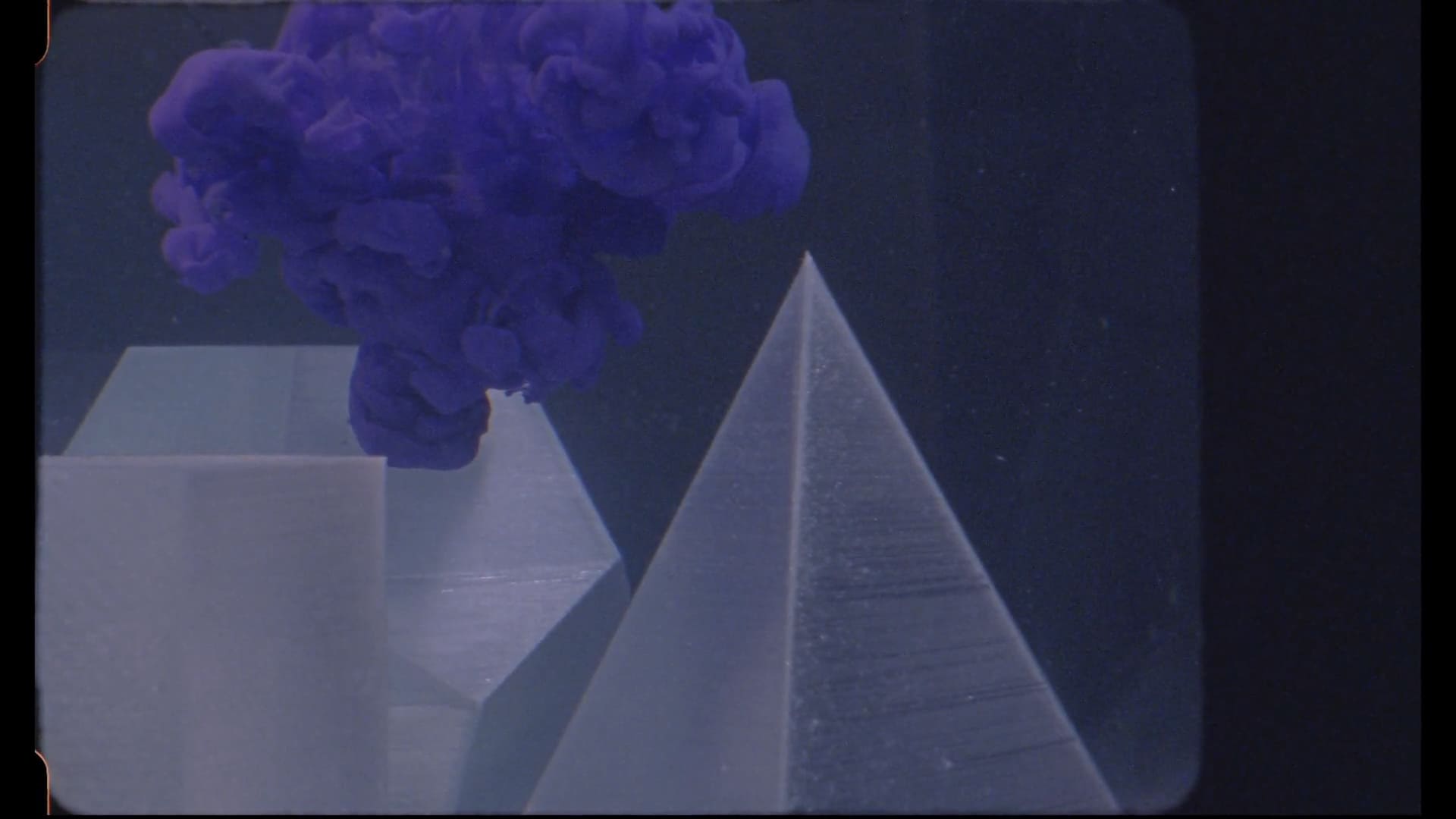
Troubled ideals : « Staying with the trouble », this expression by American philosopher Donna Haraway evokes the act of « stirring up, clouding, disturbing ». It is the result of the ecological question bursting into Western thought, letting trouble crawl in and engulf the purity of our ideas and theories. Here, the five fundamental volumes of Euclidean geometry – the tetrahedron, hexahedron, octahedron, dodecahedron, and icosahedron – also known as the Platonic solids, have been 3D-printed and then immersed in an aquarium. Acrylic paint pourings crash down upon them, their swirls and colors reminiscent of climate science visualizations. Ecology does not replace the old world, it envelops it in new complexities and interdependencies. Like the silt that, following the fall of an object, slowly rises to the surface of water once thought to be crystal clear.
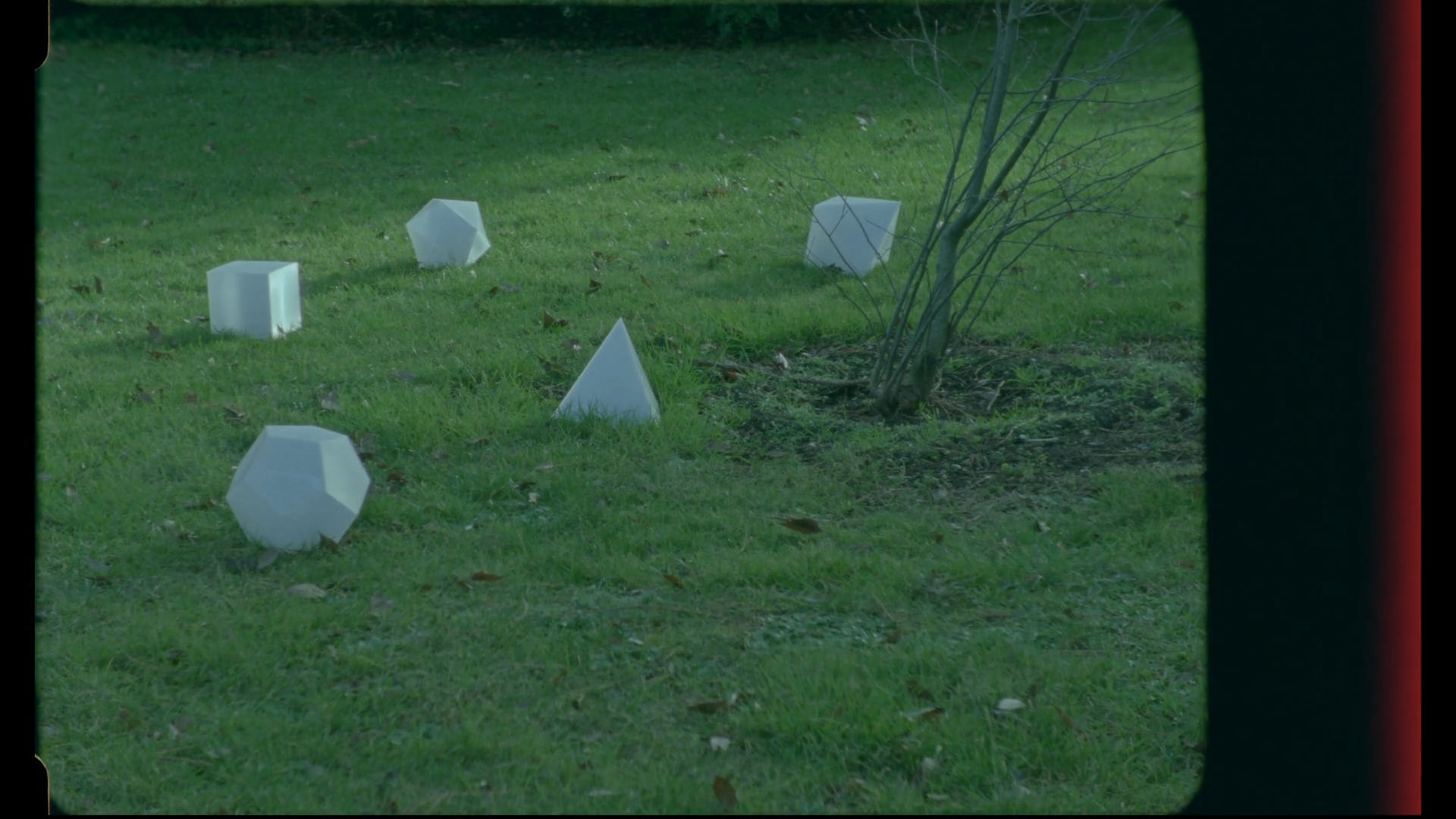
Grieving gardens : Chemical compounds, minerals, flesh, plants… matter precedes our ideas about it. This film is an invitation to mourn an inert world whose movement, its very physics, is as if « placed on pause ». Because the garden betrays this desire to freeze nature into a fixed form, the five fundamental shapes of Platonic geometry are placed at the intersections of the paths and flowerbeds of the Jardin du Luxembourg, a space where the human realm is still separated from that of a nature provided merely for enjoyment. Offering the promise of a pure substance behind physical objects, these shapes appear and disappear at random, like a distant echo reminding us that matter only endures within instability.
« 914 memerged in parallel with a research project on the ecological thoughts of images. Inspired by the work of visual artists such as Rosa Barba and Daniel Steegmann Mangrané, 914 m calls upon the structural cinema of the 1970s. This video installation was shot on exactly 914 meters of 16mm film. Going against the current acceleration of images, a physical film imposes a series of material constraints that proved highly fertile from the very beginning to the end of the creative process. Filming necessarily implies separating an object from a subject observing it. With Paul Bugsy, the cinematographer, we therefore approached technique as a "gentle constraint", rather than as a tool to be dominated, to better capture images : measured footage, the impossibility of doing a second take and the slowness of static shots. Every framing decision, every depth of field choice involved deciding what we were willing to let the world engrave on its own. Projected using three Eiki NT1 projectors equipped with V3 loopers created by Studio Antena, the films run continuously, offering an experience close to slow cinema. Arranged as a triptych, the public will be able to wander between these three map-films. The five forms of Platonic mathematics, also integrated into the scenography, echo their own image. Thus, the atlas closes : neither sensory nor intelligible, but a map that is no longer observed from the outside, a critical zone that one learns to inhabit by wandering through it. »
914 m was produced with the support of the Artefac’ association, the Goethe-Institut, and the European Union. As well as with the generous support of all the participants in the crowdfunding campaign.
Charles Ménard
Charles Menard is a French-Swiss visual artist and doctoral candidate. His work explores our different regimes of sensitivity to the Anthropocene through various audiovisual disciplines, including analog film, digital art, photography and LiDAR scanning. He is the co-founder of L'Observatoire de la fiction, an association whose mission is to study representations of ecology in fictional works.


.jpg)