
Artcast4D is a Horizon Europe project coordinated by Politecnico di Milano, bringing together ten partners from seven European countries. It aims at providing the cultural and creative industries with a global framework to design efficient, cost-effective, immersive and interactive experiences – multi-user, multi-site, multi-platform, non-invasive and open – true “global social sculptures”, built around the open-source real-time software AAASeed.
Four pilots – Issy-les-Moulineaux, Hounslow, Valencia and Athens – test these technologies outside cultural institutions, in the heart of cities, for educational, cultural or entertainment purposes, bringing together creative actors, industrial partners, civil society and public stakeholders. At Université Paris-Saclay, Le sas, BioMaps and LISN, with Cervval and the Forum des images, led Task 1.1: an original field study of the keys to immersion in public space.
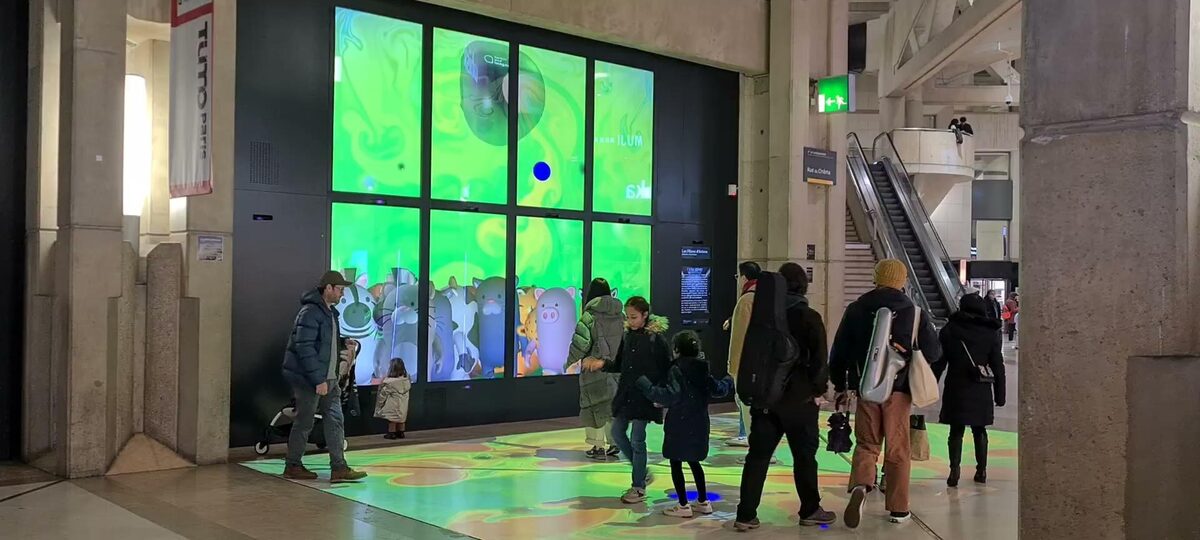
Ariadne’s Fibres in the shopfront of the Forum des images, Forum des Halles, Paris
Immersive art now fills dedicated venues where visitors come, pay and give their full attention. In a public passageway nobody comes for the artwork: people are in transit, alone or in groups, of every age and background. Can immersion still happen there – and what makes it happen?
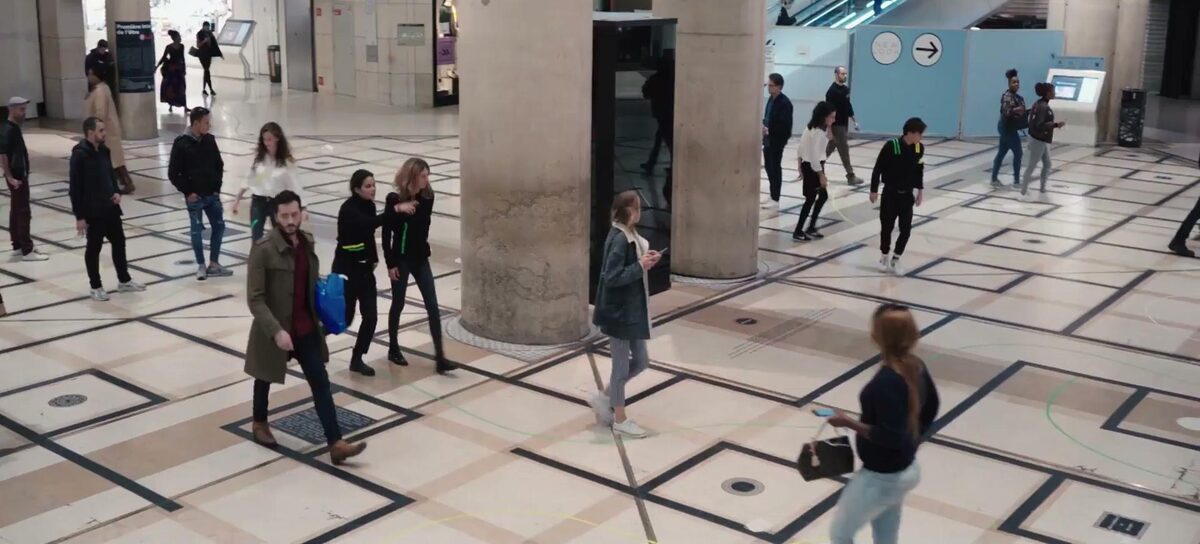
Place Carrée, Forum des Halles, Paris – a passageway crossed by thousands every hour
The study separates three notions too often used interchangeably: immersivity, the objective, technical features of the installation (field of view, surround sound, tracking, isolation); immersion, the subjective feeling of being absorbed, present, elsewhere; interaction, the active engagement with the work and with others. How do the immersivity of an installation and the way people interact with it shape the immersion they actually feel, when it stands in a public space rather than a dedicated venue?
Four interactive, multi-user installations, from the most to the least technically immersive:
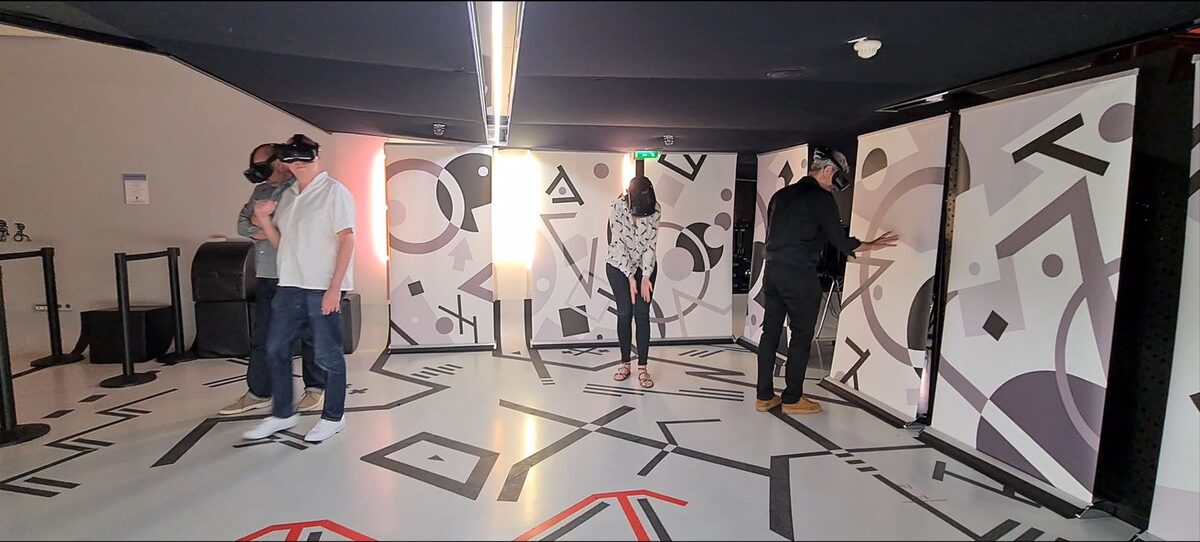
Interface: VR headsets · Interaction: 6-DOF VR, hand tracking · Duration: 17.5 min, storyline · Users at once: up to 8 · Space: Galerie Joseph, Paris · Admission: fee · Period: Jul. 2023 – Jan. 2024 · Participants: 134
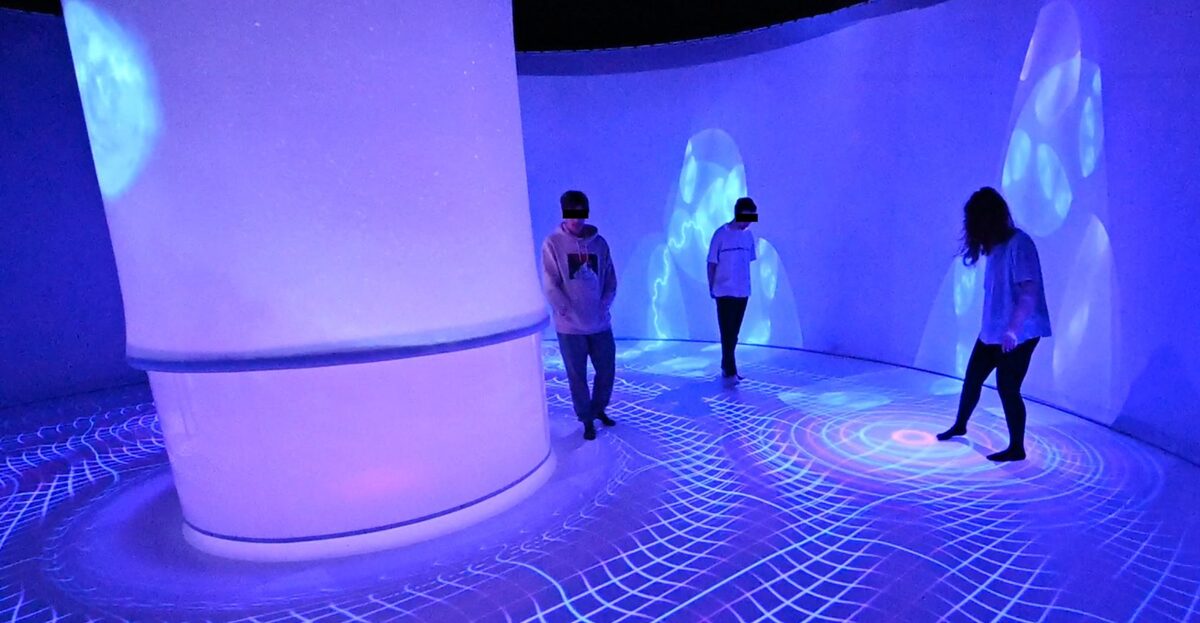
Interface: 360° wall + floor projection · Interaction: pose tracking (Kinect) · Duration: 20 min, storyline · Users at once: up to 20 · Space: Les Ateliers des Capucins, Brest · Admission: free · Period: Jan. – Apr. 2024 · Participants: 266
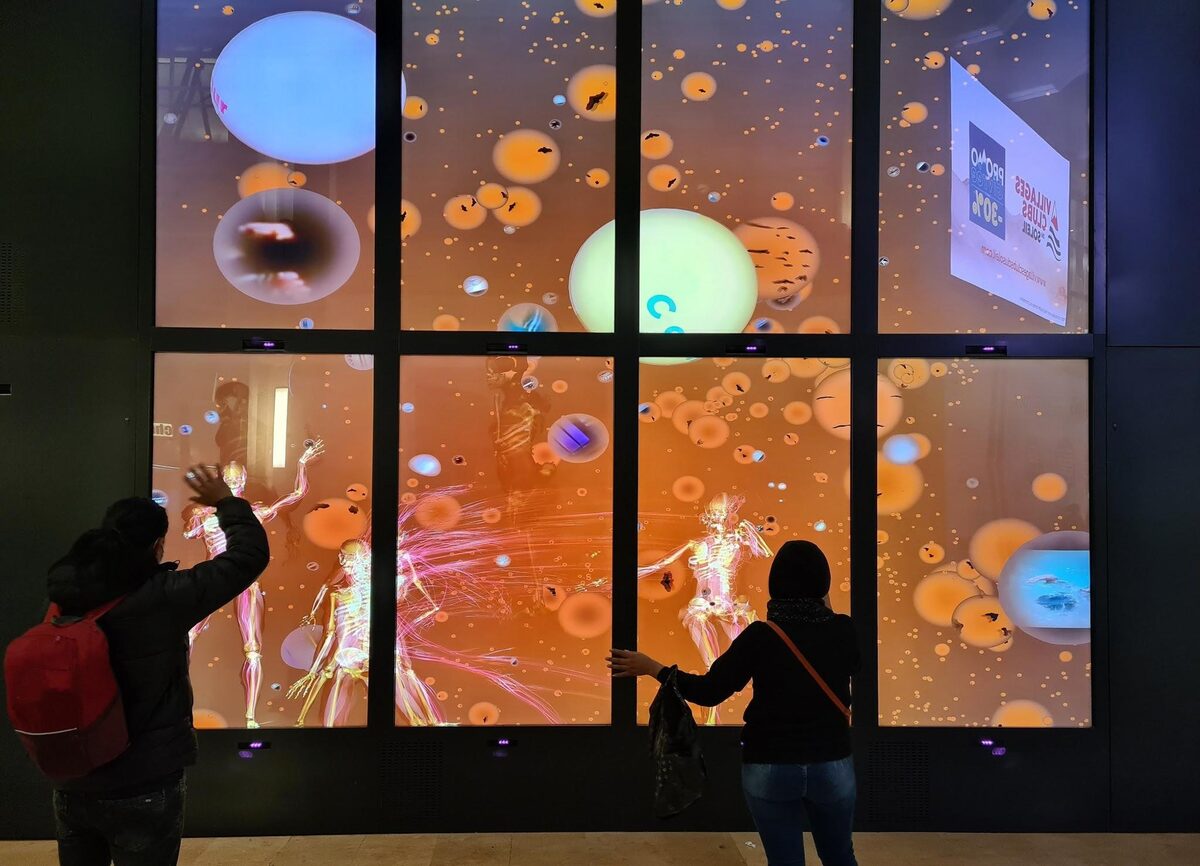
Interface: video wall (+ floor projection) · Interaction: pose tracking (Kinect) · Duration: open-ended · Users at once: unrestricted · Space: Forum des Halles, Paris · Admission: free · Period: Apr. – Aug. 2024 · Participants: 71
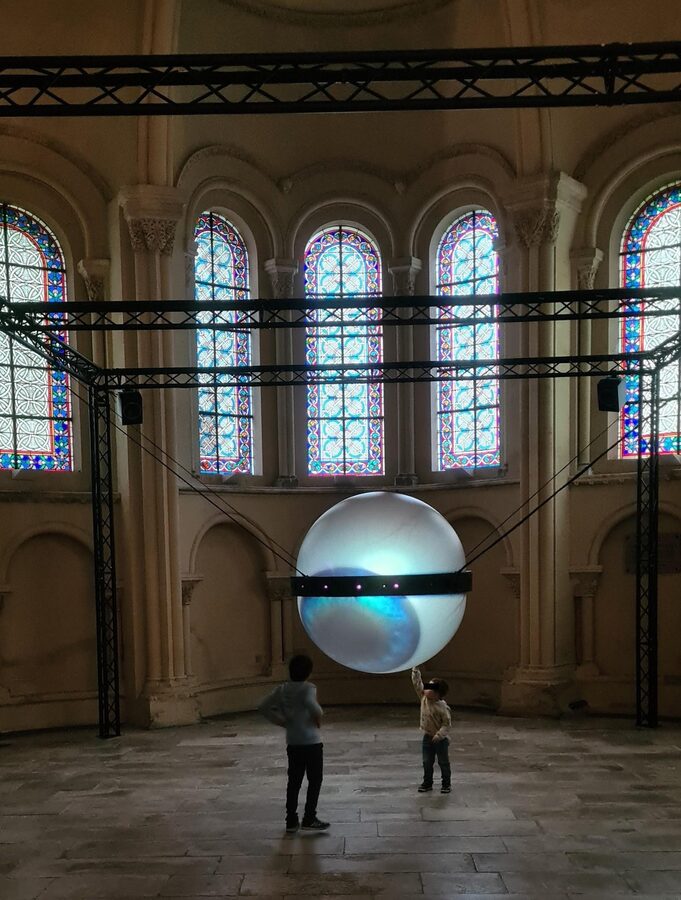
Interface: spherical projection · Interaction: motion and touch (IR cameras) · Duration: open-ended · Users at once: unrestricted · Space: Musée des Arts et Métiers, Paris · Admission: museum ticket · Period: June 2024 · Participants: 61
532 questionnaire replies (French and English) measured the subjective experience in all four installations: spatial presence, affordance, enjoyment, reality, attention, cybersickness and social presence, together with immersive tendencies, age, gender, education, prior experience and perceived duration.
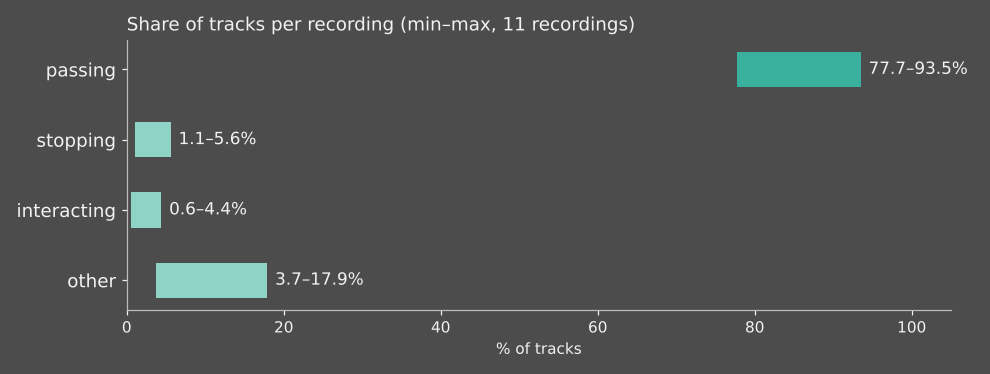
34,349 tracks of passers-by were recorded in front of Ariadne’s Fibres: eleven recordings, 28 hours from April to July 2024, filmed from a top-view camera 9 m above the passage. A detection model trained on 1,432 images, tracking and classification into passing, stopping and interacting keep only anonymous positions.
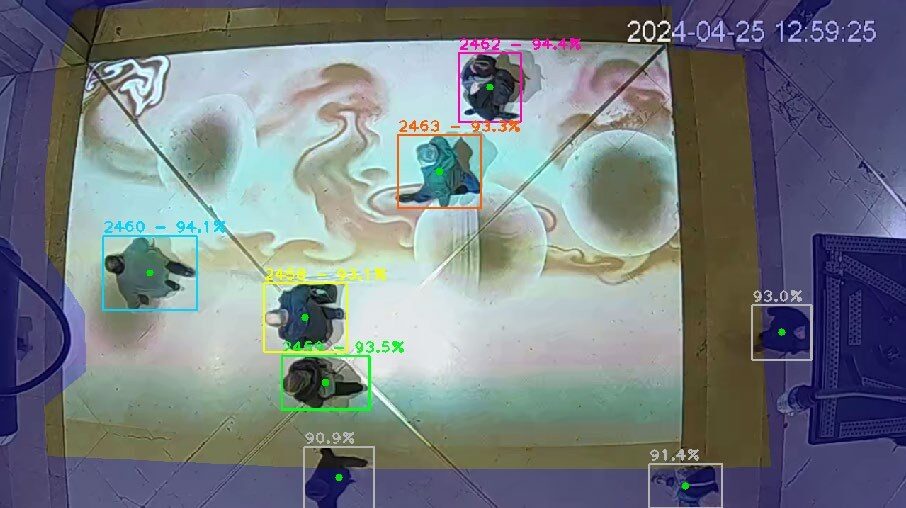
Top-view detection of passers-by in front of Ariadne’s Fibres
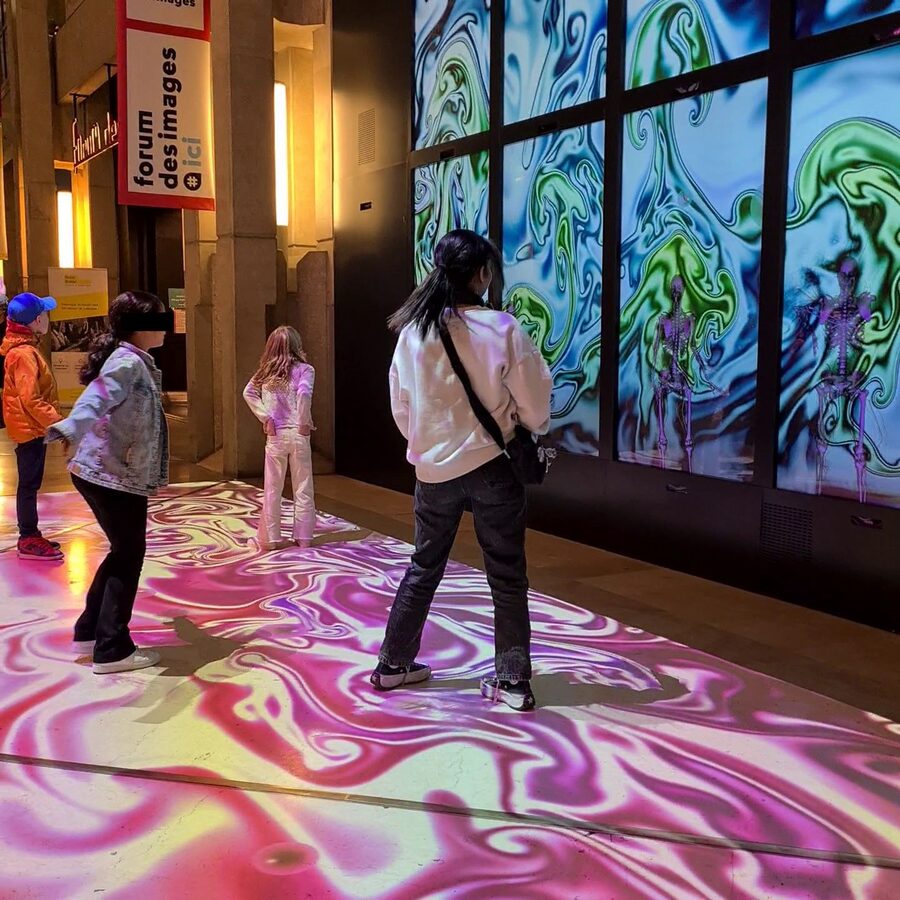
Ariadne’s Fibres with floor projection
Between 150 and 250 passers-by cross the Place Carrée every ten minutes, up to 300 to 400 on Wednesday afternoons. Most simply pass by: being noticed – and stopping people – is the real challenge of the open space.
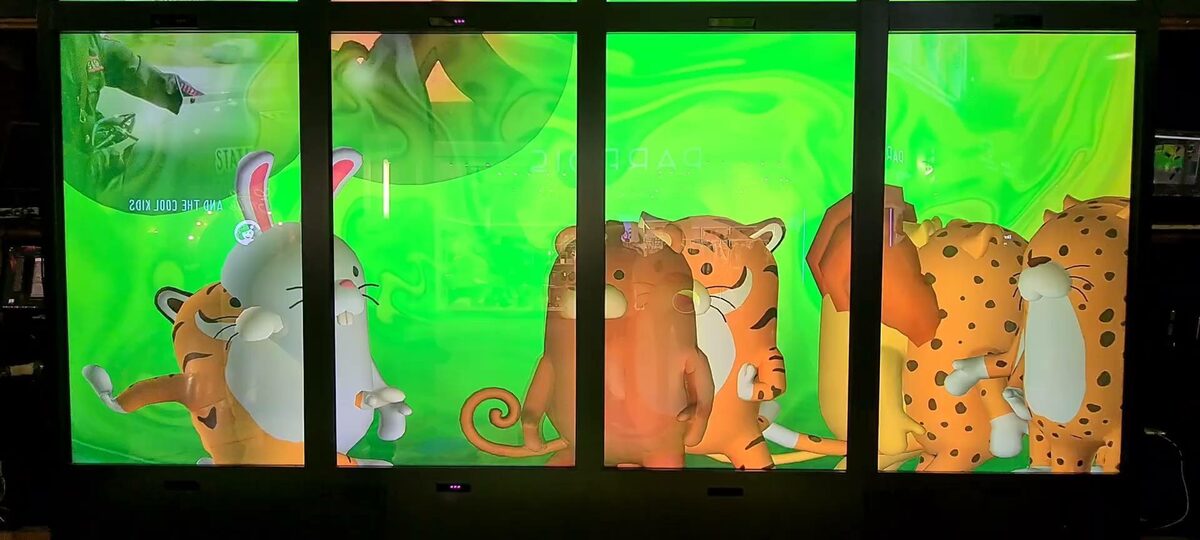
Ariadne’s Fibres, scenario with animal avatars
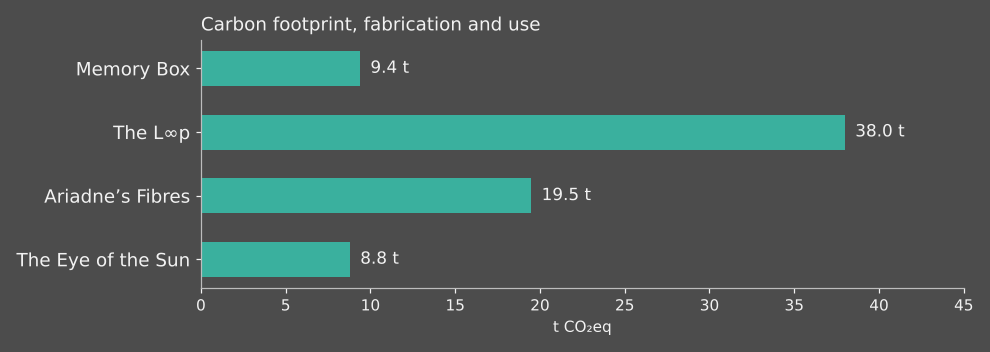
The study also estimated the carbon footprint of fabricating and running the four installations. Computer hardware dominates; the structure of The L∞p adds as much again. With uncertainties up to 200%, this is a first order of magnitude, not a life-cycle analysis.
Understand why visitors stay passive or become active, adapt complexity to novices and experts and respond to physiological signals – heart rate, skin conductance, breathing –, study group effects and physiological synchrony, compare onboarding approaches, and detect passers-by in real time in front of Ariadne’s Fibres. These leads join Le sas’s experiments on breath, from Everything goes to Being at breath.
The results were presented at the NewImages Festival, and Artcast4D’s work on immersion during Being at the virtual. More on the project website: www.artcast4d.eu.
The study is published as chapter 2, Opening up immersion: creating alternative realities in public spaces, of the book Designing Immersion in Art and Culture – Insights from Artcast4D project, edited by Davide Spallazzo and Mauro Ceconello (FrancoAngeli, 2024), open access and downloadable at the bottom of this page.
[Authors] Tim Schneider, Céline Clavel, Matthieu Courgeon, Emmanuelle Frenoux, Michèle Gouiffès, Vincent Hulot, Gérard Kubryk, Xavier Maître
[Teams] Université Paris-Saclay – BioMaps, LISN, Le sas –, Cervval, Forum des images
This project has received funding from the European Union’s Horizon Europe research and innovation programme under grant agreement No 101061163.

Book (pdf, 22 MB)
