Being at the body| Résonances art-science
The fourth resonance axis
Throughout 2025, the Résonances art-science project develops around four thematic resonance axes: Being with the Cosmos, Being at the virtual, Being at the nature, Being at the body.
These axes will be deployed on the Université Paris-Saclay campus and at the partners involved: Le Cube Garges, the Forum des images, the Musée des Arts et Métiers and the Société Française de Radiologie.
For each axis, we envision:
-
exhibitions in the laboratories involved and at cultural and scientific partners;
-
coupling days (presentation of art-science projects, workshops, round tables, debates), fostering exchanges and collaborations both at Université Paris-Saclay in an academic format and at partner institutions in a public-oriented format.

Being at the body
The Being at the Body resonance axis unfolds from October 2025 to April 2026 and involves the Center for Research on Innovation in Brain Imaging (NeuroSpin, CEA Université Paris-Saclay), the Multimodal Biomedical Imaging Laboratory Paris-Saclay (BioMaps, CEA, Orsay), the Laboratory of Physics of the 2 Infinities Irène Joliot-Curie (IJCLab), EnsadLab, the first laboratory of art and design schools in France, and the French Society of Radiology and Medical Imaging (SFR).
From autumn 2025, the laboratories host within them, over several months and with free access, art-science works and projects in order to arouse curiosity, foster exchanges, stimulate interactions and encourage everyone to participate in the associated events. Indeed, several art-science coupling days open to the Université Paris-Saclay community, to the staff of the laboratories involved and to the general public are organized around these exhibitions.
-
October 6, 2025: art-science workshop at the Palais des Congrès de Paris – Journées Francophones de Radiologie (JFR)
-
November 6, 2025: art-science coffee with artists, scientists and NeuroSpin staff
-
January 22, 2026: art-science coffee with artists, scientists and BioMaps staff
-
February 12, 2026: art-science coupling day open to the general public at NeuroSpin
Being at the body | Journées Francophones de Radiologie – Palais des Congrès, Paris
From October 3 to 6, on the occasion of the Journées Francophones de Radiologie (JFR), a congress organized by the Société Française de Radiologie (SFR), the entrance hall of the Palais des Congrès will be marked by the presence of Première Intimité de l’être, a double mirror enhanced by two full-body medical imaging techniques – magnetic resonance imaging and X-ray computed tomography. This installation is an invitation to explore one’s own reflection, between interiority and intimacy.
On the afternoon of October 3, a workshop led by Xavier Maître will extend this experience. This meeting will explore the way in which research and creation feed each other. Following the art-science research project around Première intimité de l'être, the underlying surprises that such a project brings to its actors and to the public will be explored. Based on shared serendipity, these surprises can lay the foundations of a rich and living permanent scientific and artistic culture.
These moments of shared serendipity open the way to a living, sustainable and constantly reinvented scientific and artistic culture. The installation and the workshop thus offer an invitation to think and feel differently the deep link between research in art and science.


Being at the body| NeuroSpin
Deux d'en d'eux
[Concept] Ikse Maître

Nakedness of the body under clothing; Intimacy of the being under the skin; Deux d’en d’eux exposes the inside of two people to put their inside outside; to untangle their mutual entanglement; to grasp their common dynamics and let these fragile hearts beat.
Deux d’en d’eux is the fragmented portrait of an embrace returning to space what it stole from time during the infinitesimal duration of the measurement of the free precession signal emitted by the nuclear spins of the hydrogen atoms of the water molecules composing living organisms. Deux d’en d’eux is a body-to-body living in suspension. Hearts still beat and the world still breathes.
Discover more
Première Intimité de l'être
[Concept] Ikse Maître
[Graphics and real-time 3D rendering] Matthieu Courgeon
[3D avatars] Marion Tardieu, Bruno Freyssinet, Serge Desarnaud
[Motion and gender capture] Tom Giraud, Michèle Gouiffès, Alexandra Roatis
[Electroacoustics] Michel Bertier

This mirror reflects a human being, a woman, a man, as nuclear imaging can probe them. It is the image in depth, a first singular avatar of the viewer, of you who stand in front of this mirror. It is an image enhanced by medical imaging. If you move closer or move away, you enter or exit the nuclear body that reflects you. You discover an intimacy of the body that until now was hidden, that of the energy that animates it deep within.
Discover more
Being at the body| BioMaps
Tout passe
[Concept] Ikse Maître
[Real-time graphic rendering] Matthieu Courgeon
[Drawings and 3D graphics] Sophie Larger, Gaële Misiak [Musical composition] Vincent Hulot
[Physiological signals] Adrien Duwat, Tim Schneider
[MRI data] Adrien Duwat

Your heart, this organ, this very particular muscle that often races and whose effects we feel instantly but that we never see. What if, this time, it were different? What if, this time, it were it that we saw beating? It that decided to beat faster? Or conversely to temper the flow of our blood circulation? Tout passe is a behavioral work where the three-dimensional line-based reflection of visitors shows not only hearts beating and blood circulating but lungs breathing and air passing through bodies. Tout passe is a mirror enhanced by the physiological rhythms of visitors, appropriates them and could play with them. Tout passe is a field of experimentation of the influence of this virtual self on our own behavior by attaching itself directly to our physiology, where everything passes.
Discover more
Ariadne's Fibres
[Concept] Ikse Maître
[Musical composition] Vincent Hulot
[Computer graphics and 4D GPU rendering] Matthieu Courgeon

Like a place of exchange of the images that pass through us, Ariadne’s Fibres is a living mirror that shows, through each person’s body, the nerve fibers that extend within it. As in everyone, they carry nerve impulses and propagate our action potentials.
Ariadne’s Fibres transmit information, carry images, large drops of images: those we hold, those that hold us, that constitute us, that we share.
Ariadne’s Fibres is a field of experimentation of the triggers of immersion in public space.
Discover more
Being at the body| IJCLab
Première Intimité de l'être
[Concept] Ikse Maître
[Graphics and real-time 3D rendering] Matthieu Courgeon
[3D avatars] Marion Tardieu, Bruno Freyssinet, Serge Desarnaud
[Motion and gender capture] Tom Giraud, Michèle Gouiffès, Alexandra Roatis
[Electroacoustics] Michel Bertier
[Musical composition] Vincent Hulot
[Computer graphics and 4D GPU rendering] Matthieu Courgeon

This mirror reflects a human being, a woman, a man, as nuclear imaging can probe them. It is the image in depth, a first singular avatar of the viewer, of you who stand in front of this mirror. It is an image enhanced by medical imaging. If you move closer or move away, you enter or exit the nuclear body that reflects you. You discover an intimacy of the body that until now was hidden, that of the energy that animates it deep within.
Download the file
Being at the body| Art-science residency at Le sas |Sophie Larger and Xavier Maître
From July 14 to 18, Le sas, science-art-society group, hosted within Université Paris-Saclay Sophie Larger, artist-researcher and designer at EnsadLab, and Xavier Maître, CNRS physicist-researcher at the BioMaps laboratory and artist, for a cross-residency between art and science.
In her work, Sophie draws inspiration from the heterotopias of Michel Foucault that question our ways of living, our uses and our perceptions. For his part, Xavier works on shifts of reality and on the triggers of immersion in public space.
In this first residency, Sophie transforms the gesture of drawing laid flat in 2D on paper into one sculpted in 3D in a virtual reality headset. Sophie and Xavier explore together paths of appeasement in public space, imagining through 3D drawing new forms of sensitive interaction, virtual and real.

Coupling day
Thursday February 12, 2026 from 9:30 to 19:00 – Free
NeuroSpin – Saclay Research Center, Building 145, 91191 Gif-sur-Yvette
The art-science coupling day of Being at the Body is designed to foster resonances between scientists, artists and both cultural and scientific institutions.
The objective of the day is to:
-
Present ongoing works and art-science works related to nature
-
Stimulate debate around art-science research through conferences, workshops and discussions
-
Explore new interdisciplinary approaches
These meetings are an opportunity to cross perspectives, to experiment and to create together new bridges between art and science, highlighting the diversity of approaches and contributions.
Program

Speakers

Ikse Maître
Ikse|Xavier Maître is a physicist and CNRS researcher at the Laboratoire d'Imagerie Biomédicale Multimodale Paris-Saclay (BioMaps, CEA, CNRS, Inserm, Université Paris-Saclay). His early research focused on the foundations of quantum mechanics and on the mechanisms of quantum entanglement and decoherence. Today, he combines atomic physics and medical physics to develop new tools for exploring the human body. He coordinates the European innovation project V|LF-Spiro3D on 3D magnetic resonance spirometry.
Ikse Maître initiated the science-art-society group Le sas , within which he conducts art-science research based on unconstrained human-machine interaction. He develops art-science experiments and draws on shifts in reality to test our relationships with the world and engage the public. He also coordinates the work package on immersive technologies for the European cultural heritage project Artcast4D and studies the keys to immersion in public space at the Forum des Images, through the installation Ariadne’s Fibres.

Philippe Monerris
Philippe Monerris is an author, director and producer.
He conceived and directed Slash.tv – a magazine on new images – for France 5. For Canal+ Courts et Créations, he made several programmes, and for Arte, the two seasons of the documentary review CutUp.
For France Télévisions, he has developed the art direction of many magazines, including Pour vos Yeux, Place au Cinéma, La Maison France 5, La Grande Librairie, Les Grandes Questions, Des trains pas comme les autres and Silence, ça pousse, as well as several documentary series formats.
He now directs and produces immersive experiences for the Opéra Comique, Porte 8, Valérie Lesort’s Cabaret Horrifique and, with conductor Laurence Equilbey, ArchiBeethoven – Sonata Form for La Seine Musicale.
More information: https://studio-popincourt.fr

Maflohé Passedouet
Author and artist, founder and artistic director of the multidisciplinary company Mobilis-Immobilis, recognised as a pioneer in digital arts and associated with the City of Versailles since 2016.
For more than twenty years, Maflohé has explored a multidisciplinary field at the crossroads of digital arts, live performance, visual arts and audiovisual media. Her artistic approach links art and science by questioning the body and its relationships with our inner and outer environments. The use of technology in her creations – installations, scenographies, live performances – creates interactive spaces of relationship, connection and inclusion. She brings together a team of movement professionals (dance, circus, neuro-movement) and sound composers, assembled according to each project’s intentions.
Since 2016, science combined with art has become a favoured field of exploration for innovating, creating inclusive spaces and developing tools that enhance the body’s potential.
To date, thirteen live performances and some ten interactive installations have been created. Many events, made with and for venues, participants and audiences that are always unique, have come about through partnerships in Culture & Health, Societal Art and the University, and Arts and Cultural Education. Her creations always encourage original and innovative reflection by offering poetic, immersive spaces of exploration that foster a somatic and reflective experience.

Eric Monacelli
Eric Monacelli is a professor in interactive robotics (LISV laboratory, UVSQ). He specialises in the design of robotic assistance for mobility and in the analysis of human-machine interaction, with an approach that links academic research, user needs and innovative action. His work, with a strong societal dimension, is part of action-research approaches bringing together researchers, users and artists. The Volting project illustrates this approach, combining scientific and artistic issues around the mobility of people with disabilities through the creation of technological devices, performances and cultural outreach. He is the choreographer of the collaborative show Yes We Dance! and works with the Mobilis Immobilis company on the show A la verticale de soi (<http://www.volting.org/> – labels: Ministère de la Culture – Diagonale Paris-Saclay – Choose France). He has just created the show Volting – mobilité émotionnelle, a dialogued performance with testimonies, magic, dance, music and films (Scène de recherche, ENS Paris-Saclay). He is also involved in the PEPR ICCARE for the performing arts sector, as facilitator for dance.
He is also developing several distinctive projects for mobility assistance and universal accessibility, such as Gyrolift, Virtual Fauteuil and BECAPE. As president of CEREMH, a national centre of expertise recognised as being of public interest, since its creation in 2007, he works to inform the public, train professionals and support innovation, notably through a living lab, an adapted driving school and a clinical platform (<http://www.ceremh.org/>).

Matthieu Courgeon
Matthieu holds a PhD in computer science from Université Paris-Sud, specialising in real-time interactive 3D computing. After defending his PhD in 2011 on embodied conversational agents, he joined the Centre Européen de Réalité Virtuelle in 2013, specialising in immersive collaborative interaction.
Matthieu has also contributed to various digital installation projects for science outreach and dissemination, exhibited notably at the Cité des Sciences et de l'Industrie and the Musée des Arts et Métiers in Paris.
In 2018, he joined Cervval as a research engineer specialising in collaborative virtual reality. He designed the 3D XR engine for the DigiTwin technology platform. Today, he is project manager in this field and leads R&D on XR and learning technologies.

Adrien Duwat
Adrien joined the BioMaps laboratory in February 2022, where he worked on the AZTEK trajectory and its homogeneity in magnetic resonance imaging.
Between October 2022 and October 2023, he held a research engineer position at BioMaps, studying lung mechanical stresses during breathing and developing and using an MRI-compatible spirometer within the V|LF-Spiro3D project.
Since November 2023, he has been a PhD student working on 3D MRI spirometry. His work focuses on analysing the lung stresses associated with different types of breathing, together with a doctoral mission within the Tout passe project, centred on capturing and analysing physiological signals.
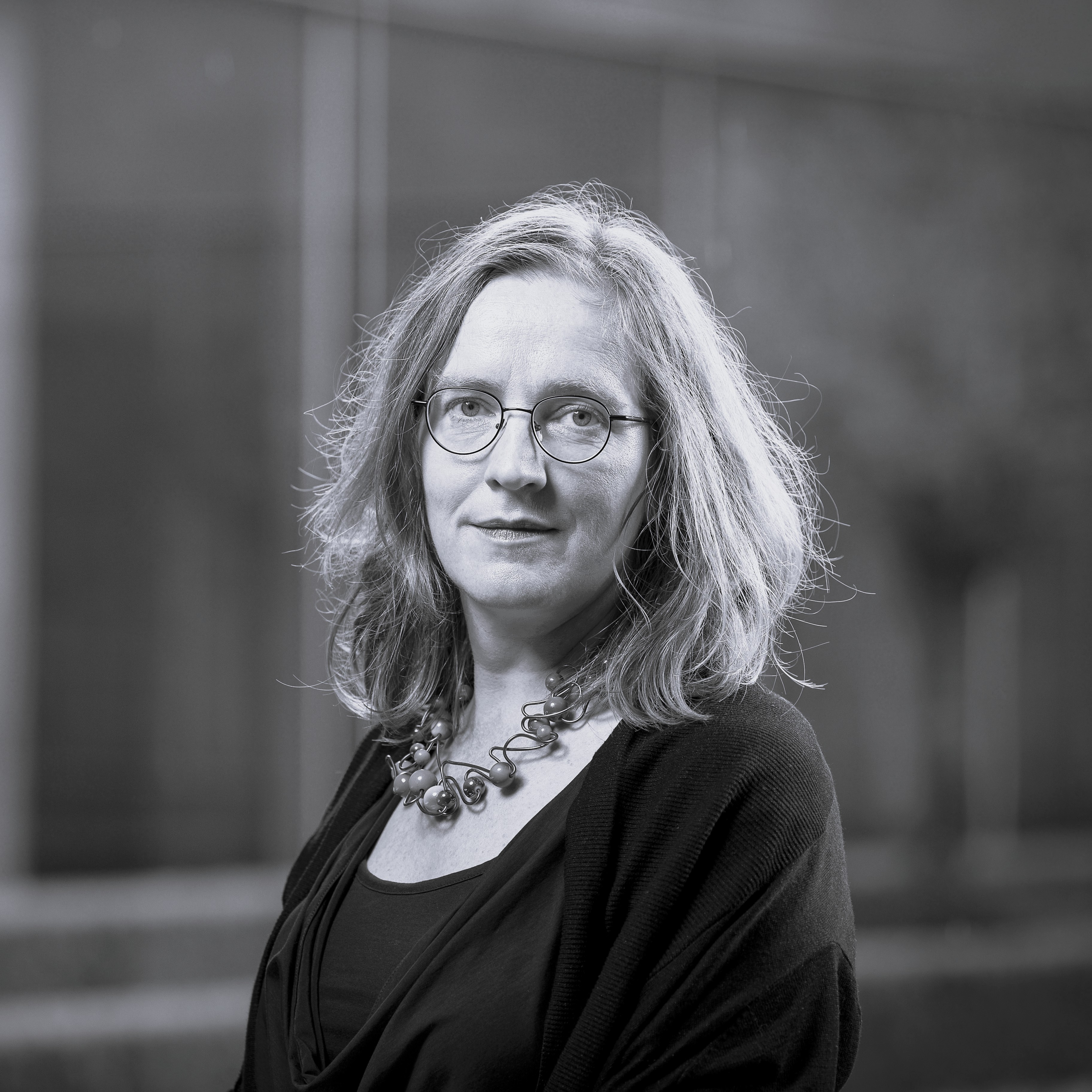
Jenny Slatman
Jenny Slatman is professor of philosophy of medicine at Tilburg University, the Netherlands. She has published widely on the role of the body and embodiment in art, expression and contemporary medical practice. Her publications include a French monograph on the meaning of expression, L'expression au-delà de la représentation. Sur l'aisthêsis et l'esthétique chez Merleau-Ponty (Paris, 2003); an English monograph, Our Strange Body: Philosophical Reflections on Identity and Medical Interventions (Chicago, 2014); and a Dutch monograph, Nieuwe Lichamelijkheid (New Corporeality, 2023), for which she received the Hypatia Prize. She has received several research grants from the Dutch Research Council (NWO): Bodily integrity in blemished bodies; Mind the Body: Rethinking embodiment in healthcare. Since 2023, she has been part of the V|LF-Spiro3D research consortium, led by Université Paris-Saclay.

Morgan Chabanon
Morgan Chabanon is an associate professor at CentraleSupélec, Université Paris-Saclay. His research focuses on transport physics in porous and biological media. Since 2022, he has created and led the Thermodanse project, a teaching-innovation and outreach project developing choreographies that place participants at the heart of living models of advanced scientific concepts.

Thomas Similowski
Thomas Similowski, 64, is professor of pulmonology at the Faculty of Health of Sorbonne Université and hospital practitioner at the Pitié-Salpêtrière hospital in Paris. He heads UMRS 1158 Inserm–Sorbonne Université, “Experimental and clinical respiratory neurophysiology”, devoted exclusively to the study of interactions between breathing and the nervous system, in the broadest sense of the term. In this context, he has set up a societal research dynamic within which an art–science–medicine interface is actively developing. The work Réespiration by Samuel Bianchini is one example.

Elise Morin
Élise Morin develops an interdisciplinary research-creation practice at the interface of art, science and territories. Her projects draw on experimental set-ups and transdisciplinary collaborations to question regimes of visibility, modes of coexistence and the place of aesthetics in the production of situated knowledge. Trained in Paris, London and Tokyo, she lives and works in Paris.
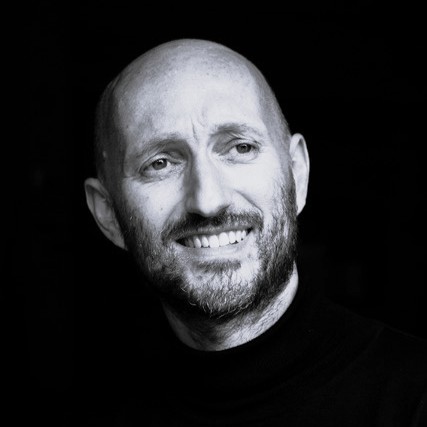
Samuel Bianchini
Samuel Bianchini is an artist and associate professor (habilitated to supervise research) at the École nationale supérieure des Arts Décoratifs (EnsAD) – Université Paris Sciences et Lettres (PSL), where he leads EnsadLab’s Reflective Interaction research group on interactive systems. From 2017 to 2023, he was also co-head of the Arts and Sciences Chair set up with the École polytechnique and the Fondation Daniel et Nina Carasso. He is a member of PSL’s SACRe research unit (Sciences Arts Création Recherche – EA 7410) and involved in its doctoral programme, in which he supervises PhD students in art and design. He lives and works in Paris. With more than 100 group exhibitions and 20 solo exhibitions, his works are regularly shown in Europe and around the world.
Closely linked to his artistic practice, Samuel Bianchini has undertaken theoretical work that leads to frequent publications. He has published more than 70 texts with publishers such as Éditions du Centre Pompidou, Éditions Jean-Michel Place, MIT Press, Analogues, Burozoïque, Hermes, Les presses du réel, Springer and Birkhäuser. As author, editor or co-editor, he has published 7 books, including, co-edited with Erik Verhagen, the reference collective volume Practicable. From Participation to Interaction in Contemporary Art (MIT Press, 2016). He also founded the international multi-format visual journal .able, published by Actar (Barcelona, New York) and launched in March 2023, of which he is currently editor-in-chief.

Nicolas Garcelon
Nicolas Garcelon, agricultural engineer with a PhD in public health and biomedical informatics, has worked in the medical field for 25 years. Since 2012, he has headed the data science platform of the Imagine Institute. He designs and develops hospital software to accelerate the reuse of real-world data. He created the Dr Warehouse® software and co-founded the start-up codoc in 2017.

François Garnier
François is a lecturer and researcher at the École Nationale Supérieure des Arts Décoratifs de Paris, PSL University, and head of the “Spatial Media” research group, which studies new forms of artistic mediation linked to the use of digital spaces: virtual worlds, virtual reality, augmented reality, mixed reality.
A specialist in immersive experience design, he develops theoretical research around the concept of Spatial Media through practice-based research in art and design, in close dialogue with the cognitive sciences, aesthetics, and communication sciences and technologies.
As a director, he has been exploring new forms of spatial mediation since the mid-1980s. He designs and directs films, events and multimedia installations in art, culture and communication, and acts as an adviser on experimental projects. In 2010, he shared this experience with Wim Wenders as 3D supervisor on the 3D feature film PINA.

Maria-Belen Lovino
Outreach officer, IN2P3 and IJCLab
Trained in science communication and education, with university teaching experience in Argentina, I am particularly interested in audiences considered “distant” from science: those who are not reached through conventional channels and who are too often regarded as indifferent or illegitimate. I work to develop more inclusive, sensitive and sometimes unconventional forms of outreach, to open research up to other imaginaries and other narratives. For me, talking about science also means talking about justice, perspective and the power to act.

Panni Margot
Argentinian fashion designer
Panni Margot is an Argentinian fashion designer whose signature combines a strong futuristic visual sense, Japanese influences (kimono, minimalism, nature symbols) and a genderless approach to clothing.
Panni Margot stands out, among other things, for his early use of artificial intelligence (AI) in fashion: he was the first designer in the world to create a collection from AI-generated designs (using a system such as DALL·E) – images created by AI, then turned into garments. This collection was presented in the United States at Runway Latinx in Chicago in 2022.
He was then invited to present a collection at New York Fashion Week (NYFW), as part of the Runway 7 show at Sony Hall in September 2024, an important milestone in his international visibility.

Sorina-Silvia Cîrcu
Sorina-Silvia Cîrcu is a transdisciplinary artist and researcher whose work lies at the intersection of art, science and ecology. Her research explores the dramaturgies of the body in the age of emerging technologies, particularly in their perceptual, relational and ethical dimensions. She is artistic director of Desiderate and holds a PhD in computer science. Her thesis, on creative processes in human-robot interaction, was carried out at LIRMM (Laboratoire d’Informatique, de Robotique et de Microélectronique de Montpellier) and at the Laboratoire d’Intelligence Artificielle et Données Sémantiques (LIASD) of Université Paris 8. Through performances, interactive devices and research-creation, she approaches digital technologies as catalysts for reconfiguring bodily and sensory experience. Her work explores the conditions for the emergence of situated forms of ecological awareness. She is the author of Ecologies of Motions: Bodies, Machines and Other Lives (forthcoming), devoted to the relationships between bodies, machines and living environments.

Collectif LAC Project
LAC Project is a collective founded and based in the Hauts-de-France region by Mathieu Calmelet, dancer and musician, and Ludivine Large-Bessette, choreographer and visual artist, combining contemporary dance, performance, digital art, electronic music and video.
Their deliberately hybrid work allows them to express their questions through the form best suited to each project: dance and augmented reality to question society’s fantasy of an all-powerful body, dance and video to examine the importance of framing and the gaze in classical traditions of representing the female body, dance, music and digital art to highlight the links between humans and machines, etc.
The collective likes to use, subvert and reinterpret codes of representation (melodrama, popular culture, the absurd, or themes of mythological or religious inspiration) to assert the importance of the body and its divisive place in our environment and social interactions. The body in motion becomes a vehicle for sensations, a vessel of stories into which the audience can project itself.
LAC Project’s works have been shown notably at Nuit Blanche in Paris, Le Carreau du Temple in Paris, Le Manège Scène Nationale in Maubeuge, Le Gymnase CDCN in Roubaix, Les Subs in Lyon, Festival Waterproof in Rennes, Festival Artonov in Brussels, Le Grand Sud in Lille, the Musée d’Art de Rouyn-Noranda in Canada, the National Dance Theatre of Budapest, Théâtre de l’Oiseau Mouche in Roubaix, Festival Baléapop in Saint-Jean-de-Luz, Le Fresnoy in Tourcoing and Festival Et 20 l’Été in Paris.